Jamindan

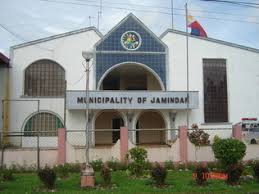
(/Ham-in-dan:/ Jamindanganon: is one of the municipality in the Province of Capiz, located in the central portion of Panay Island in Region VI, Philippines. Jamindan is one of the biggest Municipalities of the Province of Capiz in terms of land areas. It has a total land area of 41,203 hectares. Jamindan, officially the Municipality of Jamindan, is a 2nd class municipality in the province of Capiz, Philippines. According to the 2015 census, it has a population of 36,677 people.


The Municipality of Jamindan is located at the central portion of Panay Island. It is 49.5 kms away from Roxas City, the City Capital of Capiz. It is bounded on the North by the Province of Aklan, on the Northeast by the Municipality of Mambusao, west by the Province of antique and on the south by the Municipality of Tapaz.
 History
For almost three centuries, the town of Jamindan was under the rule of the Spaniards. Like any other town in the island of Panay, the richness of its culture and traditions could be attributed to its past Spanish influence has literally been acculturated to the present system. Its people warmth, hospitality and past afflictions greatly became the striking force that made Jamindan what it is.

A church made of stone was built in Jamindan under the supervision of the first spanish priest by the name of Father Tomas Palmis in the year 1882. It was said that the first image of the patron saint, San Sebastian came all the way from Spain through the port of Batan. During that time the patron saint was fetch from Batan to Jamindan via long procession of converts and devotees. Since then, every 20th day of January, the feats in honor of the patron saint has been traditionally observed and celebrated. Jamindan became the haven of philippine forces retreating from the Americans during the Philippine-American war. Among the Filipino soldiers who took refuge in Jamindan wereGenerals Ananians Diokno, Arce, Mariangan and Dulce. The hospitality of the natives enjoyed by Diokno, however, it was during the American regime that marks the gradual changes in the attitude of the people to seek and clamor for progress. A macadam type of road was constructed linking Jamindan to other municipalities and eventually to the provincial capital of Capiz with that clamor from the people. Transportation was then made easy and education among youths was made possible.

The Municipality is characterized by two pronounced season, the wet and dry seasons. Dry season relatively begins on February to middle of May and wet season emanates from middle May to January. it has two types of climate Type: II and Type:III. Type: II indicates that there is no dry season, very pronounced maximum rain period especially in a months of November and December. Type III has more or less distributed rain throughout the year and sometimes the season at certain months is hot.
 |
| Pangabit-kabiton falls |
 |
| way to Camp Peralta's Kalikasan Falls |
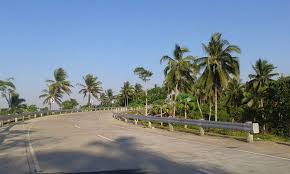 |
| Road to Forever |
 |
| Malinamon Falls |
 |
| Suhuton Cave |
 |
| Jamindan Pagoda |
 |
| Jamindan NHS |

 |
| Camp Peralta |
 |
| Pangahaw Festival |
 |
| Kalikasan Falls |
 |
| Jagnaya Church |
 |
| Jamindan Church |
 |
| Jamindan Plaza |
 |
| Suhuton Cave |
 |
Jamindan Religious Fiesta
|



Gondooooooooooooooooo
ReplyDeletewow
ReplyDeleteastig ? :)
ReplyDelete